THE CONVERSATION BEFORE DESIGN
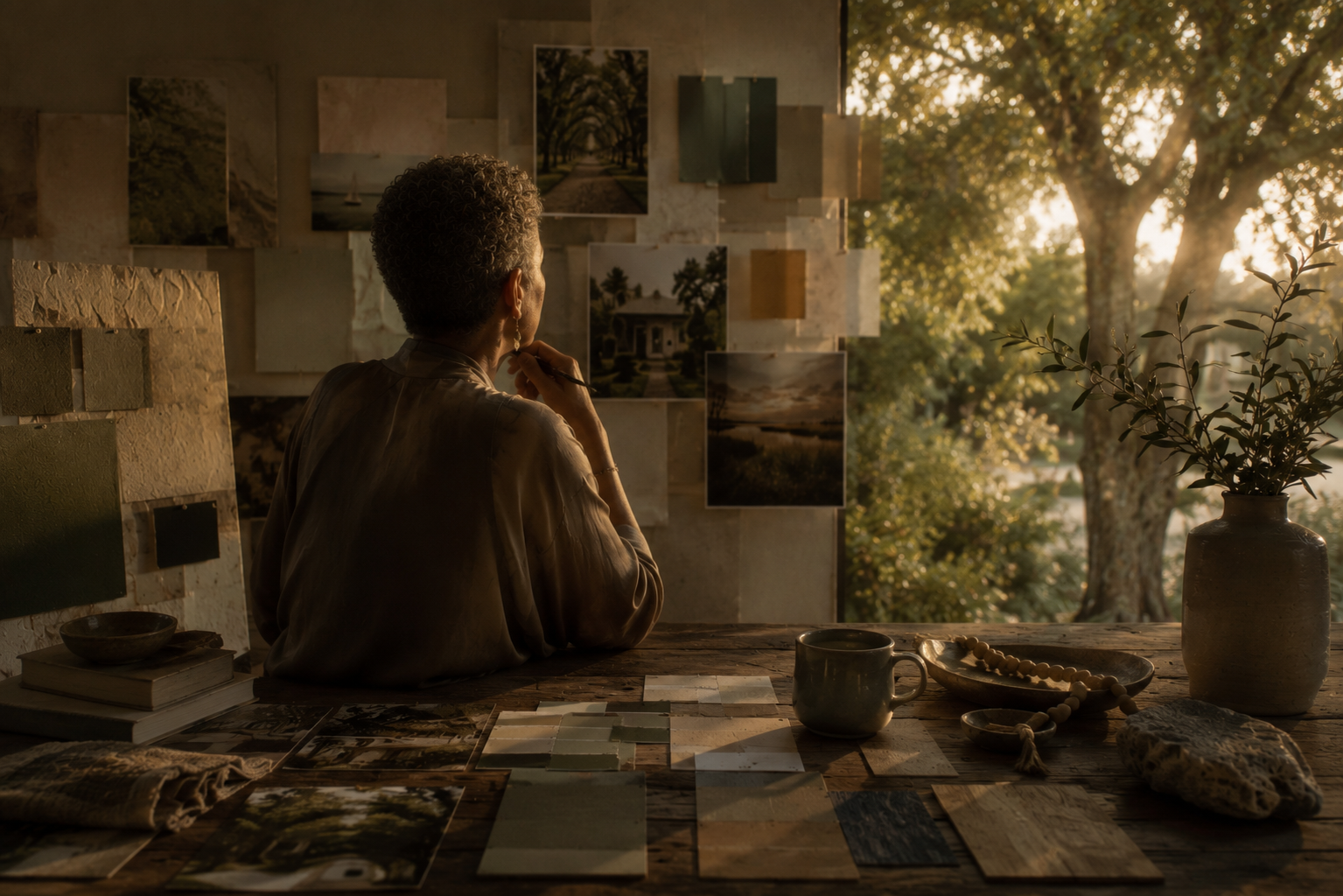
People often ask where the ideas come from.
They assume the process begins with a floor plan, a cabinet finish, or a carefully assembled collection of paint colors. They imagine there's a moment when inspiration arrives fully formed.
For me, it rarely happens that way.
It begins much earlier, and much more quietly.
It begins with listening.
Before a line is drawn, before a material is chosen, before there is even certainty about what the home will become, there is simply a place. A piece of land. Morning light. The movement of trees in the wind. The rhythm of the street. The neighboring homes that have stood there for generations. The way the sun settles into the backyard at day's end. Even the silence has something to say.
I don't believe great design begins by asking, "What do I want to build here?"
It begins by asking, "What belongs here?"
That question changes everything. It shifts the focus away from creating something impressive and toward discovering something authentic.
People sometimes ask how I choose the colors for a home. The truth is, I rarely begin with paint colors. I begin with atmosphere.
How does the morning light move through these rooms?
Does this home feel quiet or social?
Does it invite long conversations around the kitchen island or quiet mornings with coffee tucked into a window seat?
Does it ask for contrast or softness? Restraint or richness? Calm or quiet drama?
Only after those questions begin answering themselves do colors start appearing.
Not because the house is somehow speaking to me in a literal sense, but because paying attention has a way of revealing what fits. After years of designing homes, I've learned that intuition is often the result of careful observation. Light, proportion, history, materials, and context begin weaving themselves together until a palette no longer feels like a decision, it feels like the natural continuation of everything that came before it.
A muted green may echo the canopy of live oaks just beyond the windows.
A warm limestone may feel inevitable because of the afternoon light that washes across it.
A soft cream might allow the architecture itself to become the focal point rather than competing for attention.
The colors aren't selected to make a statement.They're selected to complete one.
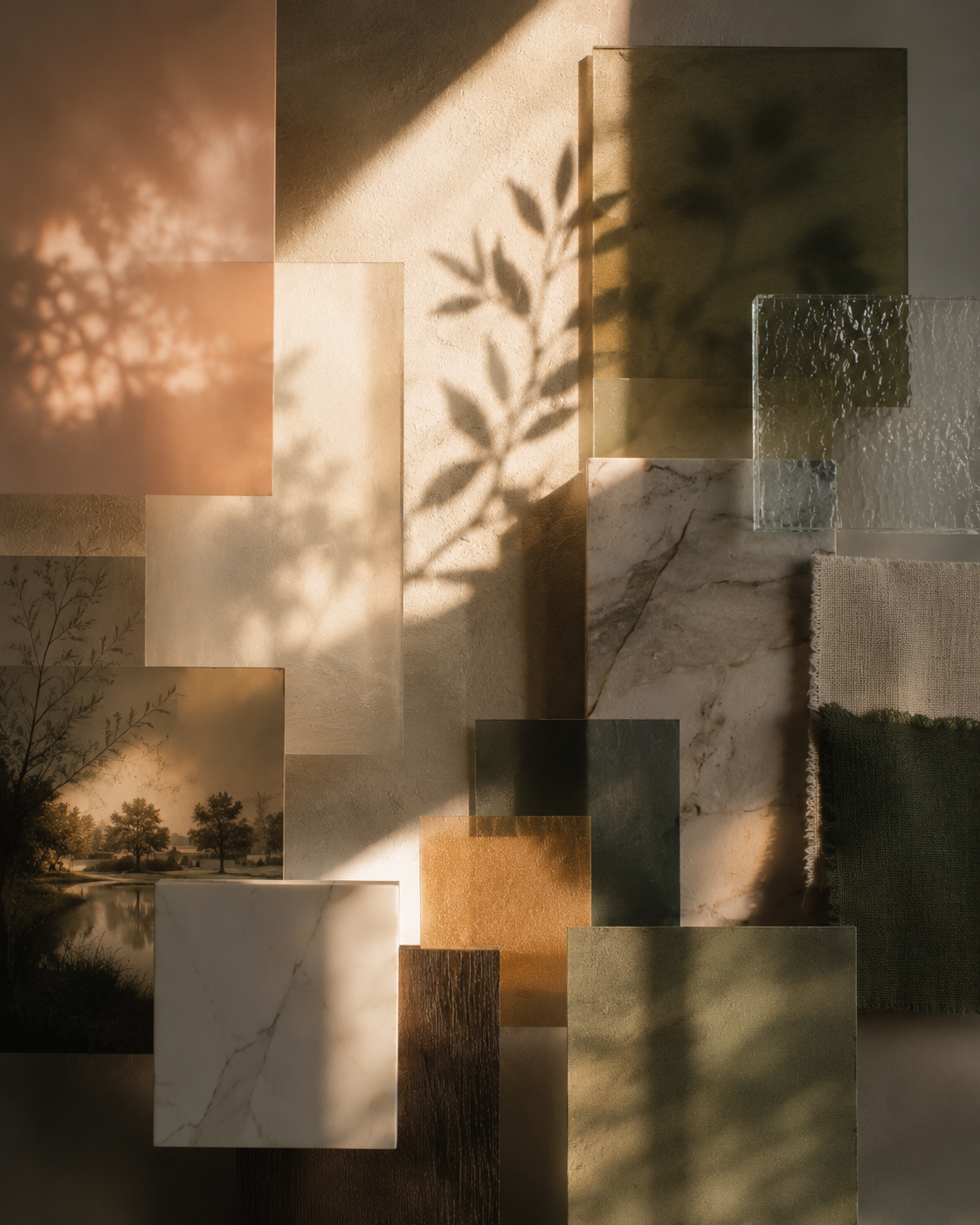
Design is not an act of imposing. It is an act of noticing.
I've often wondered if that is why some homes feel so immediately comfortable. Not because every finish is extraordinary, but because nothing feels forced. Every decision belongs to the one before it.
The architecture supports the light.
The materials support the architecture.
The colors support the materials.
The furnishings support the life that will eventually unfold inside.
Everything is in conversation.
Perhaps that's what we're responding to when we walk into a space and quietly think, This feels right. It's difficult to measure that feeling.
Science can tell us that color influences perception, emotion, and attention. We know that light affects our nervous system and that proportions change the way we experience a room. Those things matter. They are part of the story.
But they are not the whole story. There is also the human experience. The memories we carry. The comfort we seek. The longing for places that allow us to exhale.
I don't think homes have personalities in the way people do. But I do think they have a character waiting to be revealed.
My role isn't to impose one. It's to notice it. To pay attention long enough that the next decision becomes clear. Long before the first coat of paint is rolled onto a wall, there has already been a conversation. Not with words.
With light.
With place.
With history.
With possibility.
The color story is simply where that conversation becomes visible.
If you're considering building a home, perhaps the first question isn't What style do I want? Perhaps it's How do I want this place to feel?
The answers often begin there.